
The Hidden Cost of Financial Guilt
Imagine waking up on a crisp Tuesday morning. You are heading to work, feeling a little tired, and you decide to stop by your favorite local cafe.
You order a simple five-dollar caramel macchiato. It smells amazing and instantly lifts your mood. But the moment you tap your card to pay, a heavy wave of guilt washes over you.
You suddenly remember that famous finance guru shouting on a podcast. He confidently claimed that this exact five-dollar purchase is the sole reason you are not a millionaire yet.
This daily dose of shame is something millions of hardworking people experience every single week. We are constantly told that our small joys are quietly destroying our future wealth.
So, we try to be "good." We cut out the coffee, cancel the streaming services, and stop eating out entirely. We force ourselves into a financial box that feels more like a prison than a path to freedom.
For a few weeks, your bank account might look a tiny bit healthier. But how do you actually feel inside?
Most people feel completely drained, resentful, and utterly exhausted. The mental energy required to say "no" to every single small pleasure eventually takes a massive toll on your mental health.
This intense focus on extreme penny-pinching misses the entire point of living a good life. Money is supposed to be a tool that brings you security and happiness, not a strict headmaster punishing you for wanting a treat.
When you strip away every single thing that makes your daily grind bearable, you are setting yourself up for an inevitable financial crash. You are not building discipline. You are just building up a massive amount of frustration.
The Psychology Behind Frugal Fatigue
Let us talk about what happens when you decide to cut out all your small daily joys. Financial experts rarely mention the psychological concept of willpower depletion.
Human willpower is not an endless well of energy. It is much more like a battery on your smartphone.
Every time you force yourself to walk past that coffee shop, your battery drains a little bit. Every time you say no to a simple lunch with coworkers, your battery drops closer to zero.
Eventually, you hit a breaking point. This is exactly what psychologists call frugal fatigue.
You get so tired of constantly depriving yourself that you end up making a massive, impulsive purchase. You might save fifty dollars on coffee over two weeks, only to blow three hundred dollars on a sudden online shopping spree because you felt miserable.
This cycle of intense restriction followed by a massive spending binge is incredibly common. It is the exact same psychological pattern we see with extreme crash dieting.
The Diet Analogy: Why Restriction Backfires
Think about the last time a friend tried a diet where they completely banned carbs. For the first few days, they felt incredibly proud and motivated.
By day seven, they were miserable, grumpy, and staring longingly at a loaf of bread. By day fourteen, they ended up eating an entire pizza by themselves in the middle of the night.
Strict budgeting works the exact same way. When you tell your brain that something is completely forbidden, your brain suddenly wants it more than anything else in the world.
If you build a financial plan that requires you to be perfectly disciplined one hundred percent of the time, your plan is destined to fail. Humans are not robots. We need small moments of relief, joy, and spontaneity to function properly.
The Flawed Math of Micro-Transactions
The entire concept of the "Latte Factor" relies on a very specific mathematical trick. The gurus tell you that five dollars a day, invested over forty years at an eight percent return, will make you incredibly wealthy.
On paper, this math is completely correct. But in real life, it completely ignores how human behavior actually works.
If you skip your coffee today, do you immediately open your brokerage app and invest that exact five dollars? Of course not.
Most people just leave that money sitting in their checking account. Over time, that "saved" coffee money simply gets absorbed by a random trip to the grocery store or a slightly higher electricity bill.
You suffered the deprivation, but you did not actually build any long-term wealth. You traded a guaranteed moment of daily joy for absolutely nothing in return.
Macro-Wins Over Micro-Management
If we want to get completely honest about building wealth, we need to stop looking at the bottom of our receipts. We need to start looking at the top of our budget.
Your wealth is not being destroyed by three-dollar pastries. Your wealth is being quietly eaten by massive fixed costs that you are ignoring.
Let us look at a simple comparison to make this crystal clear.
Myth vs. Reality in Money Management
The Outdated Advice (Micro)The Realistic Approach (Macro)Never buy coffee outside.Negotiate a lower interest rate on your credit cards.Cancel a $10 streaming service.Shop around for better auto and home insurance rates.Feel guilty about buying lunch.Focus on increasing your main source of income.Spend hours clipping tiny coupons.Refinance your car loan to save thousands.
When you negotiate your car insurance or switch to a better mobile phone plan, you make one single decision. That one decision automatically saves you hundreds of dollars every single month without requiring any daily willpower.
This is the secret to effortless saving. You fix the big numbers once, and then you give yourself permission to enjoy the small numbers daily.
The Power of Value-Based Spending
Instead of looking at your budget as a list of things you cannot do, we need to flip the script. We are going to build a system around something called Value-Based Spending.
This is a very simple but incredibly effective way to view your personal finances. The core rule is this: you can spend extravagantly on the things you truly love, as long as you cut mercilessly on the things you do not care about.
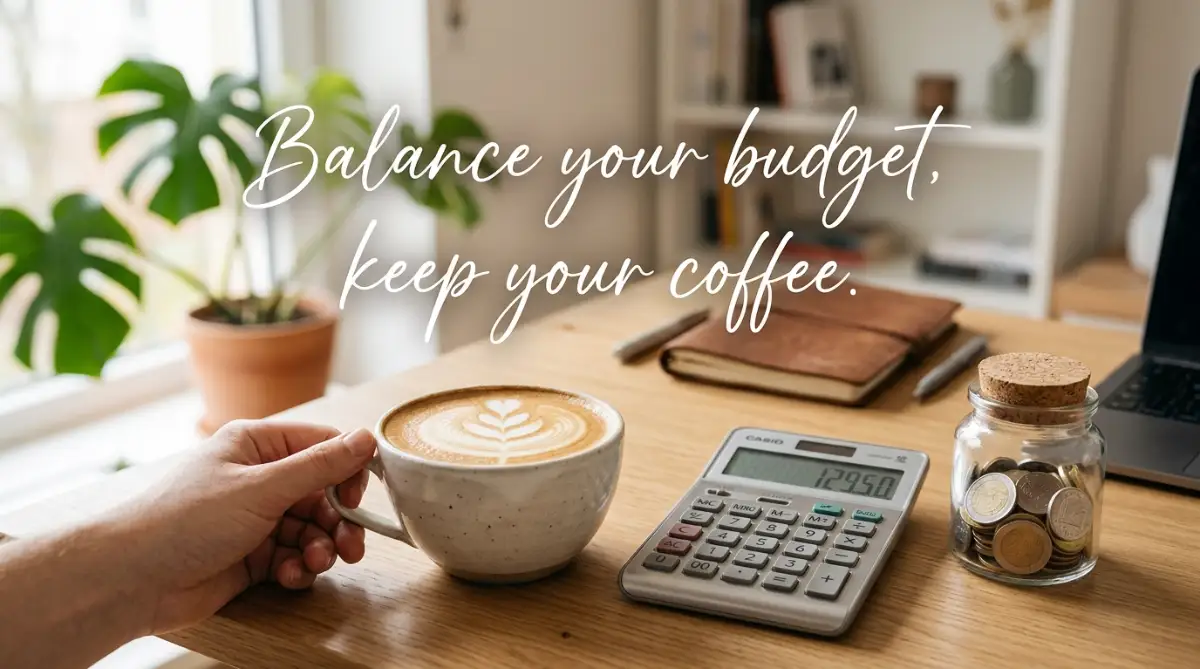
For you, that morning coffee might be the absolute highlight of your day. It gives you a moment of peace before a stressful workday begins.
If that is true, then coffee is a high-value item for you. You should never feel guilty about buying it.
However, you might be spending eighty dollars a month on random subscription boxes that you barely open. You might be paying for a premium gym membership when you prefer running outside in the park.
Those are your low-value items. Those are the specific things you need to cut out immediately.
Conducting Your Personal Joy Audit
How do you figure out what actually matters? You need to perform a quick Joy Audit on your recent spending.
Pull up your bank statement from the last thirty days. Grab a green highlighter and a red pen.
Go through every single transaction. Highlight the purchases that made your life genuinely easier, happier, or less stressful in green.
Take your red pen and cross out the things that you barely remember buying. Cross out the things that brought you absolutely zero long-term satisfaction.
I guarantee you will notice a fascinating pattern very quickly. You will see that the amount of money spent has very little connection to the amount of happiness you received.
Once you identify your green highlighted items, you build your budget around protecting them. This transforms budgeting from a tool of punishment into a tool of personal empowerment.
Re-framing the Concept of a "Budget"
The word "budget" has a terrible reputation in our modern society. Most people hear that word and immediately associate it with being broke, restricted, and stressed out.
We need to completely change how we define this word in our minds. A budget is not a set of handcuffs meant to keep you locked in place.
A realistic budget is actually a spending plan. It is simply a roadmap that tells your money exactly where it needs to go so you can sleep peacefully at night.
When you create a proper spending plan, you are giving yourself official permission to spend money. You are removing the anxiety from the checkout counter.
Setting Up a Guilt-Free Fund
One of the smartest things you can do for your financial mental health is to create a dedicated Guilt-Free Fund. This changes the game entirely.
Here is how you execute this strategy effectively. You calculate your fixed living expenses, your debt payments, and your savings goals first.
Whatever money is left over after those essentials are covered becomes your Guilt-Free Fund. You can move this specific amount into a completely separate bank account or use a specific debit card for it.
When you want to buy that fancy coffee, a new pair of shoes, or tickets to a concert, you simply check this specific fund. If the money is in there, you buy the item immediately.
There is absolutely zero guilt involved in this process. You know for a fact that your bills are paid and your future is funded.
This completely eliminates the constant mental math that causes so much anxiety. You no longer have to ask yourself if you can afford a small treat on a random Wednesday afternoon.
The Income Equation: Looking Beyond Expenses
There is a major blind spot in traditional budgeting advice. Almost all mainstream money advice focuses entirely on making your lifestyle smaller.
They tell you to shrink your desires, shrink your portion sizes, and shrink your dreams. But there is a mathematical limit to how much you can shrink your life.
You can only cut your expenses down to a certain point before you hit the basic cost of survival. You still have to pay for shelter, food, healthcare, and basic transportation.
Once you have optimized your big bills and cut out your low-value spending, you have reached the absolute floor of budgeting. Continuing to squeeze pennies out of a completely optimized budget is a massive waste of your time.
Why Expanding Your Horizon Matters
Instead of obsessing over how to save an extra twenty dollars, you need to shift your focus to the other side of the equation. You need to look at your income potential.
While there is a hard limit on how much money you can save, there is absolutely no limit on how much money you can earn. Earning more money solves financial problems significantly faster than extreme frugality ever could.
Think about the time you spend tracking every single dollar, arguing with yourself over a coffee, and hunting for tiny discounts. What if you redirected that exact same mental energy into increasing your market value?
You could use that time to learn a high-income skill online. You could update your resume and apply for positions that pay twenty percent more than your current job.
The Real-Life Application: Knowing Your Value
Let us look at a very practical scenario to prove this point. Imagine you spend ten hours a month hyper-managing your budget to save fifty dollars.
Now, imagine you take those same ten hours and use them to prepare for a salary negotiation at your current job. You research market rates, document your recent wins, and build a strong case for your value.
If you successfully negotiate even a modest pay raise, that could equal hundreds of extra dollars in your pocket every single month. That is thousands of extra dollars a year.
No amount of skipped coffees will ever equal the financial power of a properly negotiated salary. No amount of extreme penny-pinching will ever beat the security of building multiple streams of income.
We have to stop feeling ashamed for wanting nice things. Instead, we must build systems that allow us to afford those nice things responsibly.
True financial peace does not come from having a perfect, mistake-free spreadsheet. It comes from creating a healthy, balanced relationship with the money you work so hard to earn.
Designing Your Personalized Wealth Architecture
When you finally stop obsessing over your daily coffee habit, you open up mental space for strategies that actually move the needle. We need to replace the stressful habit of micro-managing with the peaceful habit of macro-optimizing.
Most people fail at saving money because they rely on sheer willpower every single day. As the American Psychological Association explains how decision fatigue affects choices, human willpower naturally drains over time.
If you have to actively decide not to spend money ten times a day, you will eventually lose that battle. The secret is to remove yourself from the daily decision-making process entirely.
The Beauty of the "Anti-Budget"
Traditional budgets force you to categorize every single transaction manually. The "Anti-Budget" completely flips this outdated model upside down.
Instead of tracking where every penny goes, you only focus on paying yourself first. On the exact day your paycheck arrives, you set up automatic transfers.
A specific percentage automatically goes to your emergency fund. Another percentage automatically moves to your investment accounts.
Once your basic emergency fund is set, you might explore building your portfolio safely to grow your wealth over time. The rest of the money left in your checking account is yours to spend freely.
You never have to track a single coffee purchase again. Because your savings were secured automatically, you can spend the remaining balance without a single drop of guilt.
Mastering the High-Impact Financial Audit
Instead of agonizing over receipts every evening, successful money managers perform a massive financial audit just twice a year. Think of it as a deep spring cleaning for your bank accounts.
Set aside two hours on a quiet Sunday afternoon. Pull up your recurring expenses, subscriptions, and insurance policies.
This is the exact moment you hunt for the big wins. Can you negotiate your internet bill down by thirty dollars a month?
Are you paying for three different streaming services but only watching one? By canceling those unused subscriptions today, you permanently fix a leak in your cash flow.
These one-time decisions require about twenty minutes of effort. However, they continue to save you money every single month for the rest of your life.
Leveraging Your Skills for Extra Income
You cannot shrink your way to massive wealth. If you have already optimized your major bills, your next step is focusing entirely on the income side of the equation.
Take a hard look at the skills you already possess. Could you offer freelance consulting in your current industry?
Could you start a small weekend side hustle based on a hobby you love? Earning an extra five hundred dollars a month is often much easier than trying to cut five hundred dollars from a lean budget.
When you increase your income, you create incredible flexibility in your spending plan. You suddenly have room to save aggressively while still enjoying the things that bring you happiness.

Hidden Traps That Secretly Drain Your Wallet
Even with the best intentions, people often fall into invisible psychological traps when trying to manage their money. These mistakes look harmless on the surface, but they can easily derail your entire financial future.
We need to address these pitfalls directly. When you know exactly what to look out for, you can easily avoid the damage they cause.
The Illusion of "Saving" While Drowning in Debt
One of the most dangerous mistakes is trying to build a massive savings account while carrying high-interest credit card debt. Many people feel a false sense of security seeing cash in the bank.
Let us look at the math behind this emotional decision. If you have five thousand dollars in a savings account earning a tiny bit of interest, it feels great.
But if you also have five thousand dollars in credit card debt charging you twenty percent interest, you are actually losing money every single day. The Consumer Financial Protection Bureau's guide on prioritizing high-interest debt clearly highlights how expensive this habit truly is.
You must attack high-interest consumer debt with everything you have. Once that heavy burden is gone, building your wealth becomes incredibly simple.
The Frugal Rebound Effect
We touched on frugal fatigue earlier, but the rebound effect is even more severe. When people restrict their spending too tightly for too long, they often experience a massive psychological snap.
Imagine you force yourself to eat plain rice and beans for three weeks straight to save money. By the fourth week, you are so incredibly miserable that you book an expensive weekend vacation on a credit card.
This single weekend easily wipes out all the money you saved during those painful three weeks. Similar to managing risk during market drops, you need to stay calm and avoid extreme emotional reactions.
A healthy financial plan includes small, regular treats to keep your morale high. If you try to sprint a marathon without drinking water, you will inevitably collapse before the finish line.
Lifestyle Creep Disguised as "Treating Yourself"
On the opposite end of the spectrum, some people completely misinterpret the idea of guilt-free spending. They convince themselves that every single purchase is a necessary form of self-care.
When you get a raise at work, it feels natural to celebrate by upgrading your lifestyle. You lease a nicer car, move to a more expensive apartment, and start eating at fancier restaurants.
This phenomenon is called lifestyle creep. It is the silent killer of wealth because your expenses rise exactly at the same speed as your income.
You might be making twice as much money as you did five years ago. But if you are still living paycheck to paycheck, your financial security has not actually improved.
The secret is to maintain your current lifestyle for just six months after getting a raise. Funnel all that new, extra money directly into your investments before you get used to spending it.
Ignoring the Importance of Security
Whether you are saving physical cash or investing in digital assets, keeping your money safe is incredibly important. Many beginners get so excited about growing their wealth that they completely ignore basic security measures.
They use simple passwords for their banking apps or leave their digital wallets unprotected. Whether you are managing fiat currency or learning to track digital assets effectively, security must always come first.
Take the time to set up two-factor authentication on all your financial accounts. A single moment of carelessness can wipe out months of hard work.
Your Action Plan for Tomorrow Morning
We have completely dismantled the myth that your daily coffee is keeping you poor. We have proven that extreme deprivation is not just miserable, it is highly ineffective.
Real wealth is built through consistent, automated habits and smart macro-decisions. It is built by taking control of your large expenses so you can freely enjoy your small daily comforts.
You do not need to punish yourself to become financially secure. You simply need to build a system that works in the background while you focus on living a rich, fulfilling life.
The Final Wealth Checklist
Do not just read this information and move on with your day. Take a few minutes right now to start putting these concepts into action.
Here is a simple, actionable checklist to get you started immediately:
- Automate Your Savings: Log into your bank tonight. Set up a recurring transfer so a portion of your next paycheck automatically moves to a separate savings account.
- Conduct a Mini Joy Audit: Look at your last ten purchases. Identify which ones actually brought you joy and which ones were just mindless spending.
- Target One Big Bill: Pick just one major monthly expense, like your car insurance or internet bill. Call the provider this week and politely ask for a better rate or a loyalty discount.
- Create Your Guilt-Free Fund: Decide on a small, specific amount of money you can spend every week on whatever you want, completely guilt-free.
Money management should bring you peace, not constant anxiety. As Harvard Business Review's insights on financial stress clearly show, reducing money worries directly improves your overall quality of life.
Start building your personalized system today. As you continue your journey, always prioritize protecting your financial assets across all platforms.
You have total control over your financial destiny. Drink your favorite coffee, enjoy your life, and let your automated systems handle the heavy lifting for your future.