The Invisible Wall for New Business Owners
You wake up with a vision. You see a problem in the market and you have the perfect fix. You spend nights planning, drawing, and dreaming. But when you look at your bank account, the dream feels like it is a thousand miles away. You need capital to buy stock, rent a space, or hire your first team member.
You walk into a big bank, full of hope. The person behind the desk asks, "What do you have for collateral?" You don't own a house. You don't have a luxury car. You just have a great idea and a lot of heart. When they tell you "No," it feels like a heavy door has been slammed in your face.
This is the reality for millions of people. The system seems built for people who already have wealth. It feels unfair and deeply frustrating. You are ready to work hard, but you feel stuck behind an invisible wall because you lack physical assets to pledge. This struggle is real, and it is the number one reason many great ideas never see the light of day.
Most people fail to find the money they need because they get lost in a sea of bad information. Here is why the search for a startup loan feels so hard:
- Big banks use old rules. They look for property or massive savings accounts that new founders simply do not have.
- Scams are everywhere. You search for "quick loans" and find sites that want to steal your data or charge you crazy fees.
- Confusing bank talk. Words like "amortization" or "personal guarantees" make you feel small and keep you from asking questions.
- Applying to the wrong places. Founders often waste weeks talking to lenders who never intended to help a startup.
- The fear of rejection. After one "No," many people stop trying, thinking that the door is closed forever.
This constant worry does more than just hurt your wallet. It slowly breaks down your mental peace and your confidence.
- You start to doubt your own talent and wonder if your idea was actually bad.
- The anxiety of the unknown keeps you awake at night, replaying the same numbers in your head.
- You feel isolated from other owners who seem to find money easily, making you feel like a failure.
- The pressure can lead to arguments with your family, making your home a place of stress instead of support.
- You feel like you are running on a treadmill that is moving too fast, and you just need someone to help you get off.
We must understand that banks are not your enemies. They are businesses that run on data and trust. When they say "No," it usually just means they don't have enough "proof" that lending to you is safe. For an unsecured loan, where there is no house to take back, the risk feels very high to them. They need a different kind of "collateral"—the collateral of a solid reputation and a clear plan.
The good news is that the world has changed. Bricks and mortar are no longer the only way to prove you are trustworthy. There are new types of lenders who look at your potential rather than your property. By learning the rules of the new game, you can turn that "No" into a "Yes." It is about taking control of your story and finding the right partners who believe in your vision.

How to Prove You Are Trustworthy Without Bricks and Mortar
Securing a loan for a new business without assets requires a smart strategy. You are not just asking for money; you are presenting a business case. You need to show that you are a safe bet. Here are the first three steps to help you secure quick startup loans without any collateral.
Step 1: Clean Up Your Personal Credit Record
When your business is new, you are the business. Lenders do not have five years of business taxes to look at. So, they look at you. Your personal credit score is your reputation on paper. It tells the lender how you have handled your promises in the past.
Start by getting a free copy of your credit report. Look for small errors. Sometimes a bill you paid months ago is still showing as "unpaid." Fixing these small errors can jump your score by thirty to fifty points in a very short time. This is the fastest win you can get.
Next, look at your "Credit Utilization." This means how much of your credit limits you are using. If your cards are maxed out, you look desperate. Try to get your balances down to below thirty percent of your limit. It shows the lender that you have credit but you are too smart to use it all. This one move makes you look like a "low-risk" person instantly.
Step 2: Build a Cash Flow Forecast That Banks Can Trust
Since the bank cannot take your house, they want to be sure your business will make enough money to pay them back. A simple "I will make money" is not enough. You need to show them a Cash Flow Forecast. This is a document that shows how much money you expect to come in and go out every month.
Be realistic with your numbers. Don't just guess. Research your market. Show that you know exactly what your rent, stock, and marketing will cost. When a lender sees a neat, logical plan, their "fear" starts to vanish. They see a person who has done their homework.
Think of your forecast like a GPS for your business. It tells the bank that you know where you are going and how you will get there. I suggest you keep it simple. Use a clear spreadsheet. When you can explain every number in that sheet, you build a bridge of trust with the lender. You are proving that you are a professional manager, not just a dreamer.
Step 3: Target Fintech and Micro-lenders Instead of Big Banks
If you need speed and you have no collateral, stay away from the massive national banks. They move slowly and they love property. Instead, look at the world of Fintech (Financial Technology) and Micro-lenders.
Fintech lenders use smart software to look at things other banks ignore. They might look at your education, your job history, or even your social media presence. They are built for speed and often have much easier rules for startups. Most of them offer a "Soft Credit Pull" quote. This means you can see if you are approved without any damage to your credit score.
Micro-lenders are often non-profit groups that want to help the community. They might give smaller loans, but they are much more likely to work with you if you have a good story. Many of them also offer mentoring. This means you get the money and someone to help you succeed. It is like having a partner who only wants to see you win.
Why Your "Reputation" is Your Real Capital
In the world of asset-free loans, your character is your collateral. Lenders look for signs that you are a person of your word. This is why being organized is so important. When you apply, have your papers ready.
I suggest you create a "Trust Folder" on your computer today. Put your last three pay stubs, your most recent tax return, and your business plan in there. When you can upload these files in five minutes, you look like a leader. You are telling the lender, "I am a person who has my life in order."
Think of it like this: if you were lending money to a friend, would you choose the friend who lost their wallet twice last month? Or the friend who keeps a neat budget? Banks feel the same way. By being organized, you are removing the "fear" from the lender's mind. You are making it easy for them to say yes.
The Power of the "Stability" Factor
Lenders love stability. If you have lived in the same apartment for a long time or stayed at your last job for years, you are a "Gold Star" borrower. It tells the bank that you do not disappear when things get tough.
If you just moved or started your business, don't worry. Just be ready to show that you are committed. Show them that you have invested some of your own savings into the idea. It doesn't have to be a million dollars. Even a small amount shows that you have "skin in the game."
When you show that you are willing to risk your own time and some of your own money, the bank feels better. They see that you are not just looking for a "handout." You are looking for a partnership. This shift in how they see you can change the whole conversation. It moves you from being a "risky startup" to a "promising venture."
Understanding the "Why" Behind Your Request
When you fill out an application, the bank will ask why you want the money. Be very careful here. If you say "to pay for things," you look like you don't have a plan.
Instead, be specific. Say "to buy three pieces of equipment that will allow us to double our production." This shows that the money will make more money. Lenders love lending for things that grow the business.
This is called "Revenue-Generating Debt." It tells the bank that you have a strategy to pay them back. When the bank sees that their money is going toward something useful, they feel much better about hitting the "Approve" button. You are showing them that you are a person with a plan, not just a person who is out of cash.
A Small Secret: The "Community" Advantage
Do you belong to a professional group or a local chamber of commerce? Sometimes, these groups have relationships with lenders. Being a member of a trusted group can act as a silent recommendation.
Also, look at Credit Unions. These are non-profit banks owned by their members. They often have much lower interest rates and are more willing to listen to your story. If you have been a member of a credit union for a year, they already know your habits.
You have already built a bridge of trust with them. Use it! It is often the fastest and most effortless way to get the capital you need. They are not looking for property; they are looking for a neighbor who wants to build something great.
Why You Should Start Small
If you cannot get a $100,000 loan today, don't get discouraged. Ask for $10,000. This is called a "Micro-Loan." It sounds small, but it is a powerful tool.
When you get a small loan and pay it back perfectly, you are "curing" your reputation. You are showing the system that you can be trusted. The bank that gave you $10,000 today will be much more likely to give you $50,000 next year.
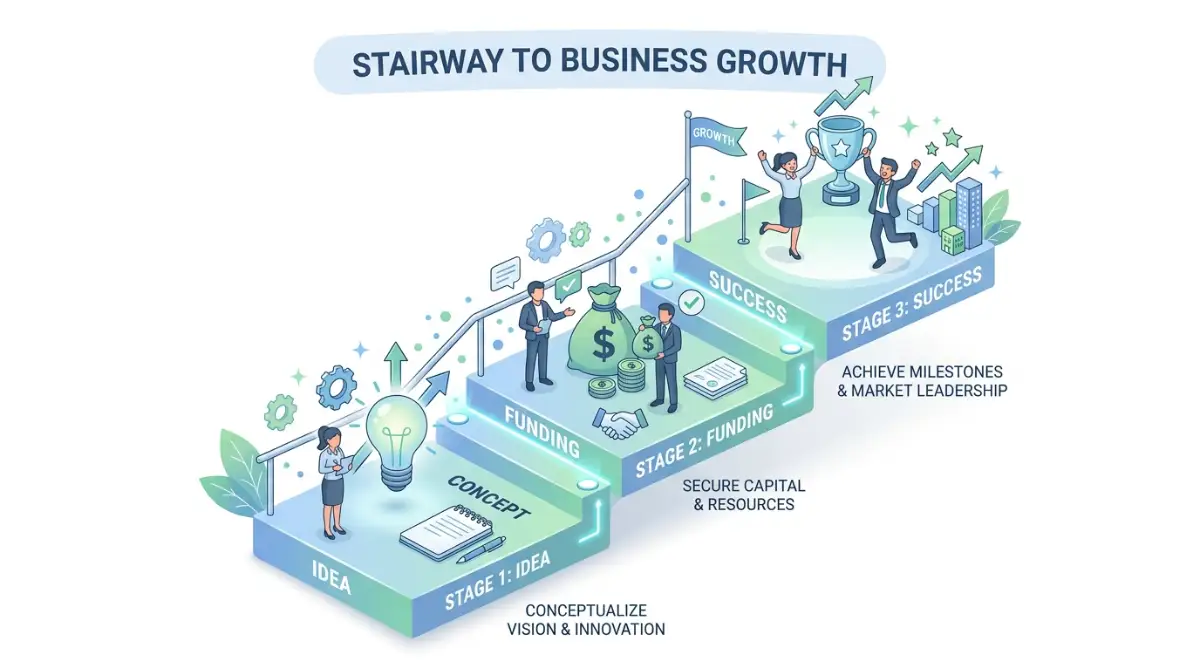
You are building a staircase to success, one step at a time. It is better to have a small loan that helps you move forward than to have no loan at all. This "slow and steady" approach is how some of the biggest companies in the world started. They proved themselves with the small things before they were trusted with the big things.
The Role of a Solid Business Plan
I know you have the idea in your head. But the bank cannot read your mind. They need to see it on paper. A solid business plan doesn't have to be a hundred pages long. It just needs to be clear and honest.
Show them who your customers are. Show them who your competitors are. And show them why your business will win. When a lender reads a plan that makes sense, they stop worrying about your lack of collateral. They start getting excited about your potential for profit.
Your plan is your voice when you are not in the room. Make sure it sounds confident, professional, and well-researched. This is how you win the game without needing a house to pledge as security. You are using your intellectual collateral to get the capital you need.
Scaling Your Startup with Advanced Funding Secrets
Now that you have fixed your credit and built a basic plan, it is time to use insider tactics. These secrets are what the top 10% of entrepreneurs use to get money when the big banks say no. We are moving beyond the basics to show you how to truly stand out.
Use the Power of "Social Proof" and Professional History
If you do not have a building to show the lender, you must show them your brains and history. Lenders want to know that you are a pro who knows your industry. If you have worked in your field for five or ten years, that is a massive asset.
I suggest you update your professional profiles online, especially on sites like LinkedIn. Some modern lenders actually scan your professional background to see if you have the skills to run a business. They look for stability and growth in your past jobs.
This is like a "social collateral." It tells the bank that even if the business fails, you are a high-value person who can find a way to pay them back. Your expertise is your security. Use your past wins to prove that your current startup is a safe bet for their money.
Leverage the "Revenue-Based" Financing Secret
This is a secret that many new founders miss. If your business has already started making even a little bit of money, you can use Revenue-Based Financing. In this setup, the lender gives you cash in exchange for a small piece of your future sales.
They do not ask for a house or a car. They only care about your daily or monthly sales. If you have a slow month, your payment to them goes down. If you have a huge month, you pay them back faster.
It is a very flexible way to grow. It is perfect for startups that have high sales but no physical assets. You are basically selling a piece of your future success to get the tools you need today. This is a very smart way to keep your personal assets safe while getting the capital you need to scale.
How to Stay "Loan-Ready" for the Long Run
Getting one loan is great, but keeping the doors open for future money is better. To do this, you must treat your business bank account like a holy place. Never, ever use your business money to pay for your personal lunch or your home rent.
When a lender sees personal spending in a business account, they get scared. They think you are not organized. Keep your funds separate and your records clean from day one. This simple habit makes you look like a high-level CEO.
Also, try to build a "Debt-to-Income" ratio that makes banks happy. As your sales grow, do not immediately spend all the profit. Keep a cash cushion in your business account. Lenders love to see that you have at least three months of loan payments sitting in the bank.
This "cushion" is your best defense against rejection. It proves that you have a backup plan if sales dip for a month. By following these pro-level secrets, you are not just getting a loan. You are building a reputation of excellence that will bring you more money at lower rates as you grow.
Hidden Traps That Can Destroy Your Business Dreams
Even with a great plan, it is easy to fall into a hole if you are not careful. Many founders get so excited about the cash that they forget to look for pitfalls. Avoid these five big mistakes to keep your startup safe and your future bright.
1. Mixing Your Personal and Business Wallets
This is the fastest way to get a "No" from a serious lender. If your bank statement shows you paying for your Netflix and your business stock from the same account, you look like an amateur. Lenders want to see a professional boundary.
If you mix your money, you also lose the legal protection of your business. It makes it easy for lenders to come after your personal car or savings if things go wrong. Open a separate business account today and stick to it. It is the best gift you can give your financial future.
2. Ignoring the "Total Cost" (APR)
Lenders love to talk about "low monthly payments." They might say, "It is only $200 a week!" That sounds easy, but you must look at the Annual Percentage Rate (APR). This is the real price of the money.
Some fast loans have APRs as high as 50% or even 100%. If you borrow $10,000 and have to pay back $18,000 in one year, that is a very expensive tool. Always do the math on the total dollars you will pay back. If the cost is too high, it might kill your profit margins and sink your ship before it even leaves the port.
3. Borrowing More Than You Actually Need
When a bank offers you $50,000 but you only need $20,000, it is very tempting to take the whole thing. You think, "I can buy a better office or a fancy sign." This is a trap.
Remember, you have to pay interest on every dollar you borrow. That extra $30,000 will cost you thousands in fees. Only take the exact amount needed to hit your next goal. You can always ask for more once you prove that the first $20,000 helped you grow.
4. Not Having a Clear "Exit Plan" for the Debt
Most people focus on getting the money. Smart owners focus on how to pay it back. If your plan is just "I hope I sell enough," you are in trouble.
You should know exactly how much your sales need to be to cover the loan. Have a Plan B in case the sales are slow. Will you cut costs? Will you do a special sale? Having an exit plan keeps you calm when things get tough and ensures you never miss a payment.
5. Falling for "No Credit Check" Scams
In the world of finance, if it sounds too good to be true, it usually is. Any lender that says they do not care about your credit or your plan is likely a predatory lender.
They will hide crazy fees in the fine print. Or they might take a huge piece of your daily sales that makes it impossible for you to pay your rent. Stick to reputable Fintech companies and local credit unions. A real lender will always want to see that you have a way to succeed.
Image Here-----------------
Taking the Leap Toward Your Business Success
You now have the map to find the capital you need. You know that you do not need a house or a pile of gold to be a successful founder. In today's world, your hard work and your data are your true assets.
The path to growth is open to you. Start today by organizing your "Trust Folder" and checking your personal credit score. Look at your daily sales and see which digital funding path fits your startup best. You have the knowledge; now you just need the courage to take the first step.
Believe in your vision and keep your records clean. The money is out there, waiting for founders who are prepared and professional. You are no longer just a dreamer; you are an entrepreneur with a plan to win. Go out there and build something amazing!