
When the Charts Turn Red: What a Crypto Crash Really Feels Like
It was 2 a.m. when Rafi checked his phone for the fifth time that night. His portfolio, worth ten thousand dollars a week ago, now showed six thousand two hundred.
He had not slept properly in three days. His hands felt cold and sweaty every time he opened the tracking app.
This is not a rare story in the world of digital currencies. Thousands of new investors go through this exact moment of fear every single time the market dips hard.
You put in your hard-earned savings with excitement and hope. You watched the numbers grow for a few weeks and felt like a genius.
Then, almost overnight, harsh red numbers replaced the green ones everywhere you looked. Your stomach drops when you see the sudden change.
Your mind starts running worst-case scenarios about your future. Should you sell everything now to save what is left?
Should you wait for a miracle bounce back? Or should you buy more to lower your entry price?
The scariest part of this experience is not just the falling price. It is the heavy silence and confusion that comes afterward.
No one warned you how lonely a market downturn can feel. The friends who convinced you to buy are suddenly quiet.
The social media groups turn into panic rooms full of shouting, anger, and blame. You feel trapped in a dark room with no clear way out.
You start checking your phone every ten minutes during your day. You do it at work, during dinner with family, and even in bed.
Sleep gets harder to find as the days go by. Your focus at your day job starts to slip away.
Small arguments with your family happen more often because your mind is completely somewhere else. This emotional weight is real, and it hurts your daily life.
We need to talk about this mental struggle honestly before we talk about any strategies. No chart pattern or trading trick works if your mind is running on pure fear.
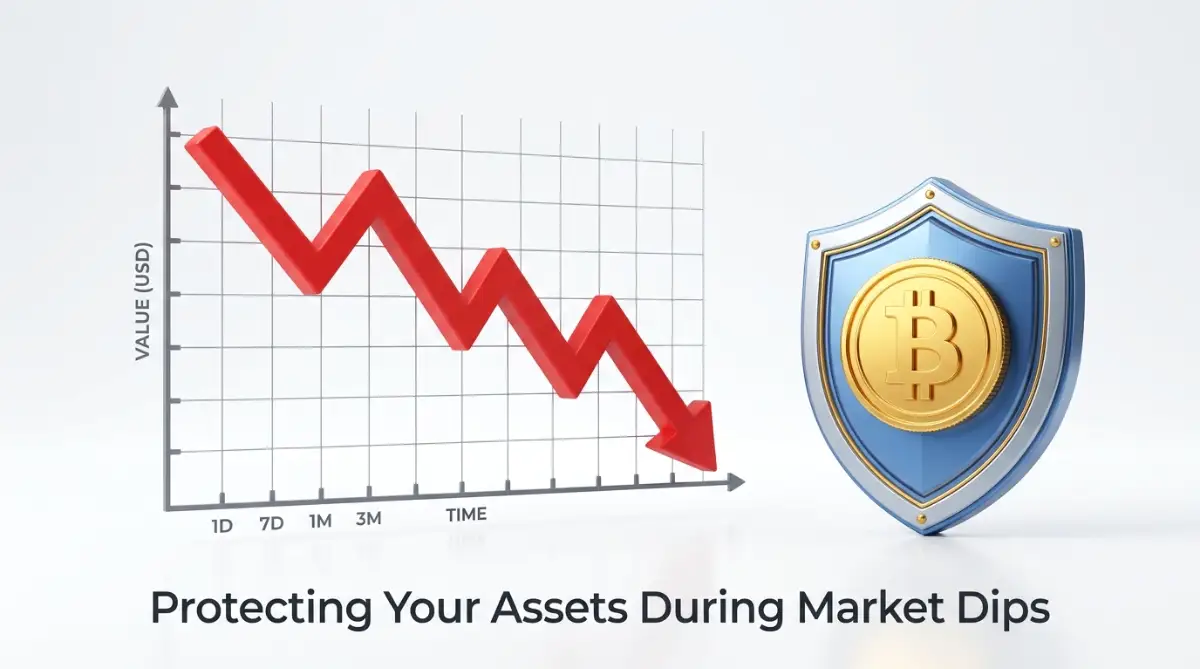
The Real Reasons New Investors Get Hurt in a Downturn
Most beginners do not lose money because the market dropped. They lose money because of how they reacted to the drop.
When fear takes over, logic leaves the room. Let us break down the main errors in detail so you can protect your cash.
Mistake One: Putting In Money You Cannot Afford to Lose
This is the most common mistake made by new buyers. It sounds like simple advice, but almost every panicked investor makes this error first.
Rafi used a big part of his emergency cash to buy digital coins. That single choice is why the crash hit him so hard.
When you use money meant for rent or bills, you set yourself up for panic. You cannot afford to wait out a storm because you need the money soon.
A simple rule is to only invest money that will not affect your daily life if it disappears tomorrow. If a ten percent drop makes you feel physically sick, you have put in too much.
This is not about being weak or afraid. It is basic math and survival.
Fear clouds your judgment when you need it most. Keep your living expenses separate from your trading account.
Mistake Two: Checking Prices Every Few Minutes
Constant price-checking does one thing very well: it makes small drops feel like huge disasters. It keeps your nervous system in a state of high alarm.
Imagine watching your weight on a scale every five minutes. Normal daily changes would make you feel stressed and confused.
Prices behave the same way in the digital asset space. Short-term price moves look massive up close, but they are often tiny when you look at the big picture.
Try to limit how often you look at the screen. Check your account once a day, or even once every few days, during a down trend.
Turn off the push notifications on your phone for price changes. Your mental health will thank you for the quiet space.
Mistake Three: Selling Everything Out of Panic
This is where most beginners turn temporary drops into real losses. Prices are only numbers on a screen until you click the sell button.
Before that, a drop is just a paper change. It is uncomfortable to look at, but it is not final.
Think of it like owning a nice house in a good town. If home prices in your town dip for a few months, you do not run to sell your home at a loss.
You wait because you know the housing market moves in long waves. Digital assets work on a similar long-term system, though the waves are much sharper.
When you sell at the absolute bottom, you hand your assets to experienced buyers. These buyers are happy to take your discounted coins and wait for the recovery.
Myth vs. Reality in Market Dips
Let us look at some common beliefs that lead beginners to make bad choices during a drop.
The Common MythThe Actual Reality"A dropping price means the project has failed."Prices often fall due to the general market mood, not project quality."I must sell now before it goes down to zero."High-quality assets have historically survived and recovered."Averaging down always saves your investment."It only helps if the project has real-world utility and active developers."I need to watch the charts constantly to trade well."Too much viewing leads to tired, emotional decisions.
Mistake Four: Copying Other People's Moves Blindly
It is very easy to follow the crowd when you are scared. Someone in an online group chat says "sell now" and everyone follows without a second thought.
Ten minutes later, another post says "buy the dip" and the same people turn around and buy. This behavior is exhausting for your mind and bad for your wallet.
Most people in public chats do not know your financial situation. They might have a different risk limit or a different plan.
Expert Insight: Before you make any buy or sell move, write down your reason for it on paper. If you cannot explain it clearly to yourself in one simple sentence, do not make the trade yet.
This simple habit stops you from making fast, emotional moves. It forces your logical brain to take control of your hands.
Mistake Five: Ignoring Basic Portfolio Balance
Many beginners put all their money into one or two tokens. They do this because they heard a big story or saw a video about quick riches.
When that specific token crashes, there is nothing else to soften the hit. Your entire net worth takes a massive blow.
A healthier approach is to spread your funds across different types of assets. You can keep some in cash, some in large stable assets, and only a tiny bit in high-risk projects.
This will not stop price drops from happening. However, it reduces how badly one bad event can hurt your entire financial life.
Practical Steps to Build a Calmer Mindset
You do not need a degree in finance to handle a downturn. You just need to build a few honest habits that protect your peace.
Set a Personal Drop Limit
Decide in advance how much of a price drop you can handle without losing sleep. This is your personal risk tolerance.
If you know you panic when an asset drops by twenty percent, adjust your portfolio. Move some of your funds into more stable options before the storm hits.
Knowing your limits helps you stay calm when the market begins to shake. You can watch the drop without feeling the urge to run away.
Write Down Your Long-Term Thesis
When you first buy an asset, write down the reasons why you believe in it. Keep this note in a safe place.
During a crash, read this note instead of scrolling through social media panic posts. Ask yourself if the core reasons for your purchase have changed.
If the technology is still good and the team is still working, the price drop is just noise. If the fundamentals are gone, then you have a logical reason to exit.
Take Regular Screen Breaks
When the market is highly volatile, the best action is often no action at all. Close your computer and walk away.
Spend time in nature, talk to friends, or focus on a hobby. A short walk outside does more for your decision-making than another hour of staring at red lines.
Giving your brain a rest allows you to look at the market with fresh eyes later. You will make much better choices when you are rested.
Talk to Trusted Friends
Do not keep your worries to yourself during a hard market drop. Talk to someone you trust who is not caught up in the trading hype.
An outside view can help you see that life goes on outside of the financial charts. It reminds you of what is truly important in your life.
Sharing your stress makes it feel much smaller and easier to manage. You do not have to carry the weight alone.
The Recovery Plan: How to Prepare for the Next Cycle
Every market downturn eventually runs its course and moves into a quiet phase. This quiet phase is the best time to rebuild your plan.
Learn the Power of Dollar-Cost Averaging (DCA)
Instead of trying to buy the exact bottom, use a simple schedule. Invest a small, set amount of money at regular intervals.
This helps you buy more of the asset when prices are low and less when prices are high. It takes the guesswork out of your investing journey.
Over time, this method usually gives you a solid average price without the stress of timing the market. It is a slow, steady way to build a position.
Research Project Fundamentals Closely
Use the quiet times of a bear market to study the projects you own. Look at their developers, their updates, and their real-world use cases.
Strong projects keep building even when prices are low. Weak projects often disappear or stop updating their code.
Focus your money on the projects that show real activity and progress during the dark times. This increases your chances of recovery when the market turns green again.
Keep Your Assets in Safe Storage
Security is even more important when the market is down. Do not leave your long-term assets on public exchanges.
If an exchange faces financial problems during a crash, your funds could be locked or lost. Use a personal hardware wallet to keep your private keys safe.
This keeps your funds under your direct control, away from external risks. It is a simple step that offers massive peace of mind.
What Rafi Did Differently the Second Time
A few months after his first big scare, another market drop hit. Rafi's portfolio dropped again, this time by fifteen percent in a single week.
But this time, his reaction was completely different. He did not lose sleep or skip meals.
He had a written plan next to his desk. He checked his portfolio once a day at noon, then closed the app.
He spent his evenings playing sports and talking with his family instead of looking at charts. He reminded himself of his long-term goals and his written thesis.
He still felt a bit uncomfortable when he saw the red numbers. That feeling of discomfort never fully goes away.
But he did not make a rushed, emotional decision that he would regret later. He stayed steady and calm.
That is the true goal of this journey. It is not about having perfect emotions; it is about making better, logical decisions.
Advanced Survival Tactics: How Experienced Investors Stay Calm and Protect Wealth
The difference between a beginner and a professional is not the size of their wallet. The real difference is how they handle their time, information, and assets when the market drops.
When a down market hits, the noise on the internet grows very loud. Everyone has an opinion, and most of those opinions are driven by fear or greed.
To survive these cycles, you must develop a professional mindset. This means learning how to separate real data from crowd panic.
Establishing an Information Diet
If you want to keep your mind clear, you must control what information enters your head. Watching constant video updates and reading chat rooms will only make you anxious.
Many people spend hours looking at predictions on social media platforms. Most of these platforms are designed to keep you excited or scared so you keep clicking.
According to the official SEC alert on social media and investment fraud, bad actors often use these spaces to push false news[1]. They want to create panic so they can profit from your fast choices[1].
Instead of reading random posts, focus on official project updates and developer reports. Look for actual work being done on the network rather than price speculation.
A simple test is to ask yourself if the news you are reading will matter in five years. If the answer is no, close the tab and move on with your day.
The Power of Cash Reserves
Experienced investors always keep a portion of their portfolio in stable coins or cash. They call this "dry powder."
When a crash happens, they do not have to sell their assets to pay for their daily life. They can use their cash reserves to buy high-quality assets at a deep discount.
If you are fully invested all the time, you have no choices left when the market drops. You are forced to just sit and watch your value fall.
By keeping some cash on the side, you turn a scary drop into a potential opportunity. It changes your entire outlook from fear to interest.
Protecting Your Assets from Systemic Failure
During a market drop, the companies that hold your assets can face serious financial trouble. If you keep your coins on a public trading platform, you are taking a major risk.
If the platform goes bankrupt, your funds can be locked up for months or lost completely. This is why safety must be your top focus when the market gets shaky.
The best way to avoid this risk is to take complete control of your keys. You can learn how to do this by reading our detailed guide on how to secure your crypto.
Using a hardware device keeps your private keys completely offline and away from struggling exchanges. It is the single most important habit you can build to ensure your long-term safety.
Understanding Market Cycles and Whales
Large investors, often called "whales," use market drops to their advantage. They know that new investors panic easily when prices start to fall.
Whales will sometimes sell large amounts of assets to push the price down on purpose. This triggers stop-loss orders and makes beginners sell in fear.
Once the price is low enough, the large investors slowly buy back those same assets at a much lower cost. They are playing a game of patience against your emotions.
If you understand this game, you will stop letting them take your coins. You will see that price drops are often just transfer phases where wealth moves from the impatient to the patient.
Do's and Don'ts for the Deepest Dips
Here is a quick reference guide to help you make decisions when the market is highly volatile.
- Do set up automatic buying plans using small amounts of cash over time.
- Do move your long-term assets into a personal offline wallet.
- Do spend your extra time learning about how block systems work.
- Don't use leverage or margin to try and win back your losses quickly.
- Don't listen to anonymous tips in private online group chats.
- Don't check your portfolio value more than once a day.

The Hidden Traps That Quietly Drain Your Digital Wallet
When people see their wealth shrinking, they often try to fix the problem as fast as possible. This desperation leads to some of the most expensive mistakes you can make.
Let us look at these silent traps so you can recognize them before they hurt your savings.
Chasing the "Next Big Winner"
When your main assets are down, you might be tempted to look for high-risk, low-cap projects. These projects often promise massive gains in a short time.
You might think that putting a small amount into a risky coin will help you make back your losses quickly. This is almost always a trap.
During a down market, small and untested projects are the first to go to zero. They lack the funding, the community, and the developer support to survive a long winter.
Stick to established assets with real history and strong utility. It is better to grow your wealth slowly than to lose the rest of your cash on a lottery ticket.
Trusting Fake Support Agents and Scams
Scammers know when people are stressed and looking for help. They set up fake customer service accounts on social media and messaging apps.
They might message you directly, offering to help you "validate" your wallet or fix an error. They will use professional-looking logos and polite language to win your trust.
Once they get your private keys, they will empty your wallet in seconds. Never give your backup words to anyone, no matter how official they look.
A real support team will never ask for your private keys or your passwords. If someone asks for them, block them immediately and report the account.
The Danger of Trade Fatigue
Staring at the screen for hours creates a state of mind called trade fatigue. Your brain gets tired from processing too much stress and visual data.
When you are tired, you make simple mistakes like typing the wrong address or clicking the wrong button. You might sell an asset by accident or buy something at the wrong price.
Your physical health also suffers when you stay glued to your desk. Your eyes get strained, your neck hurts, and your sleep quality drops to zero.
These physical issues make you more emotional and less logical. It is much better to close your laptop and take a break for a few days.
Letting Market Stress Ruin Your Income
The biggest hidden cost of a market drop is the time you lose from your daily life. If you spend your work hours checking charts, your performance will drop.
You might lose your job, miss a promotion, or fail to build your main career. This is a double loss because your active income is what funds your investments.
Instead of wasting your energy on falling charts, focus on building new, reliable skills offline. For example, you can build a stable online career by learning search engine optimization to help businesses grow their web traffic.
This skill is always in demand, regardless of what the digital currency market is doing. It gives you a reliable source of cash that you can use to fund your lifestyle and your long-term goals.
If you prefer administrative work, you can explore how to work as a virtual assistant to assist global clients from your home. This type of remote work keeps your mind busy with productive tasks while generating a steady paycheck.
Having multiple sources of income takes the pressure off your investment portfolio. You no longer need your coins to go up tomorrow because your daily bills are already paid.
Your Action Plan for the Days Ahead
Success in the digital asset space does not come from predicting the future. It comes from having a system that works in any weather.
Let us build a clear plan that you can start using today to protect your money and your peace of mind.
The Three-Step Daily Routine
To keep your mind clear and your assets safe, try using this simple routine every day during a market drop.
- Step One: Check your account only once a day at a set time, such as noon. Do not check it before bed or right after you wake up.
- Step Two: Spend thirty minutes reading educational materials, such as developer docs or economic history books. This builds your knowledge instead of your anxiety.
- Step Three: Focus on your main job or your side skills for the rest of the day. Treat your daily work as your primary shield against market movements.
This routine keeps you grounded in reality. It prevents you from letting the digital numbers control your actual life.
Questions and Answers for Concerned Investors
Q: Should I sell my assets if they drop by more than fifty percent?
A: If you bought high-quality assets with a long-term plan, a short-term drop is not a reason to sell. However, if you bought a high-risk project because of social media hype, you should review its fundamentals. If the project has no real use case and the developers have stopped working, it might be best to accept the loss and move on.
Q: How do I know when the market has finally reached the bottom?
A: No one can predict the exact bottom of a market cycle. Even professional traders get this wrong most of the time. Instead of trying to guess, use a steady buying plan with small amounts of cash that you can afford to leave untouched.
Q: Is it safe to keep my stablecoins on a trading platform during a crash?
A: Keeping any asset on an exchange carries some risk during a major panic. If you have a significant amount of stablecoins, it is safer to hold them in your own personal software or hardware wallet. This ensures you can access them whenever you decide to buy.
A Calm Mind is Your Greatest Investment Asset
The waves of the market will go up and down, just as they have done for decades in traditional finance. A down market is not a sign of failure; it is a natural part of the economic cycle.
The people who build lasting wealth are not those who never face a crash. They are the ones who stay calm, stick to their plan, and protect their physical and mental health.
Your peace of mind, your relationships, and your daily health are worth far more than any digital token. Do not let the red numbers on a small screen take those away from you.
Take a deep breath, close your trading apps, and focus on the real world today. Build your skills, secure your assets offline, and let time do the heavy lifting for you.